
Record Linkage Without a Shared Identifier: Matching Records Across Siloed Systems
Record linkage without a shared identifier uses fuzzy scoring across name, address, phone, and email fields to connect records across siloed systems — no common primary key required.
Better Reporting and Analytics Through Higher Data Quality
Analytics reports are only as accurate as the data behind them. Learn the six-stage data quality pipeline that eliminates duplicates, fixes formats, and delivers trusted insights.
Automated Data Cleansing: How to Eliminate Manual Cleaning Configuration
Automated data cleansing replaces manual scripts with a configurable AI pipeline that profiles, standardises, deduplicates, and verifies records automatically — cutting error rates by 40–70%.
Entity Resolution: Build vs. Buy vs. Hybrid — Which Approach Is Right?
For most teams, buying entity resolution software beats building it. A custom build costs $500K–$1.5M over three years and takes 6–18 months. Learn when to build, buy, or hybridise — with a clear decision framework.
Fuzzy Matching Explained: Algorithms, Workflows, and Real-World Examples
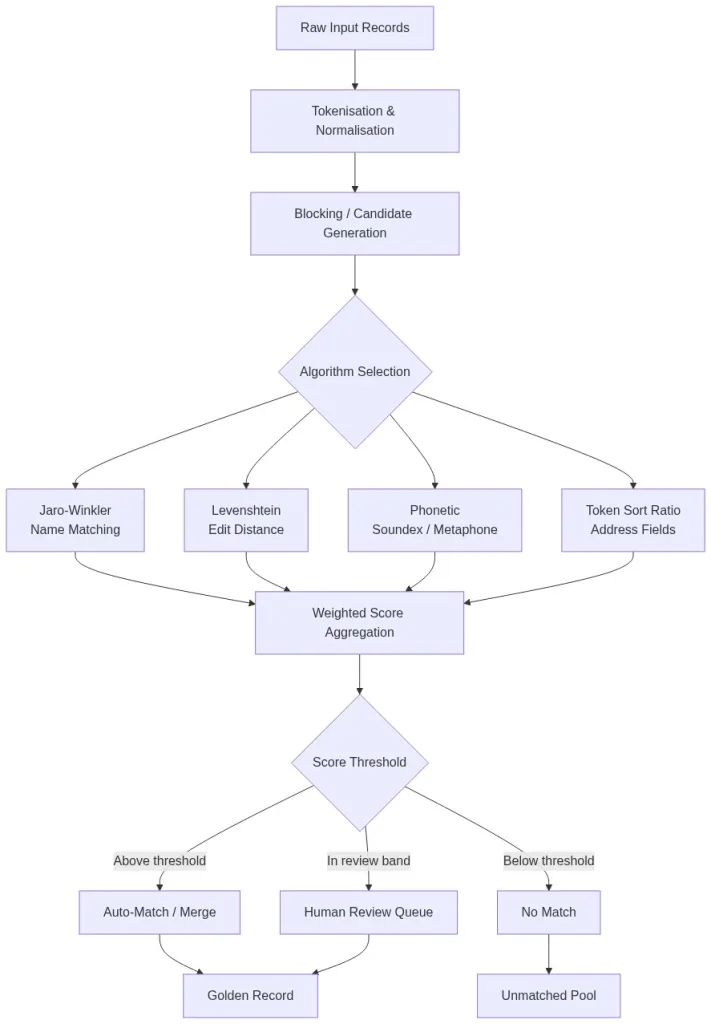
Fuzzy matching finds records that refer to the same entity even when names, addresses, or IDs are spelled differently. Learn how the algorithms work and when to use each one.
Data Standardisation Best Practices: How to Normalise and Unify Data Across Systems
Data standardisation normalises formats, values, and structures across every source system so that matching, deduplication, and analytics produce reliable results. Learn the seven best practices that reduce downstream errors by 40–60%.
CRM Deduplication: How to Find, Merge, and Prevent Duplicate Customer Records
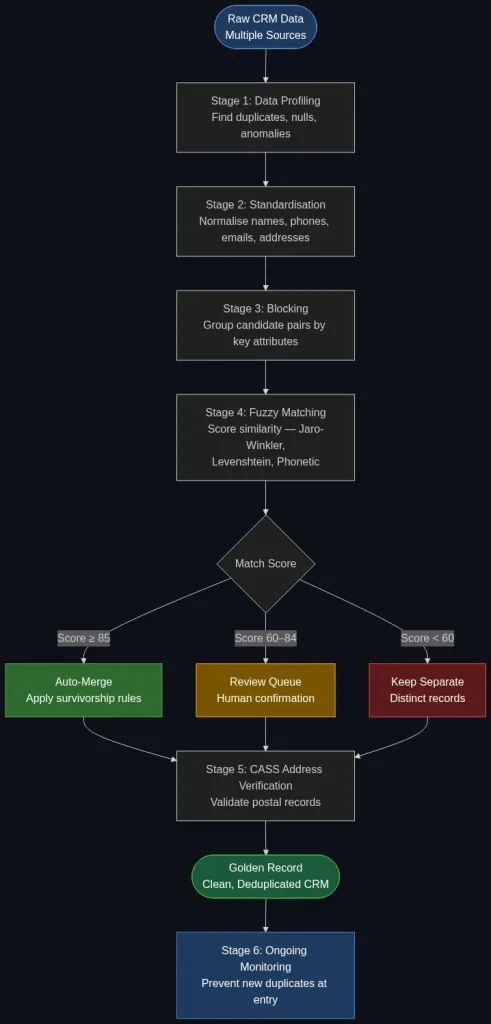
CRM deduplication identifies duplicate customer records, merges them into a verified golden record, and prevents new duplicates at entry — using fuzzy matching, survivorship rules, and a six-stage pipeline.
Legacy Data Platform End of Life: Your Migration and Data Quality Options
When a legacy ETL or data integration platform reaches end of life, migrate with a data quality pipeline first: profile, cleanse, deduplicate, resolve entities, and verify addresses before loading into your new system.
Entity Matching: How Algorithms Identify the Same Real-World Object Across Datasets
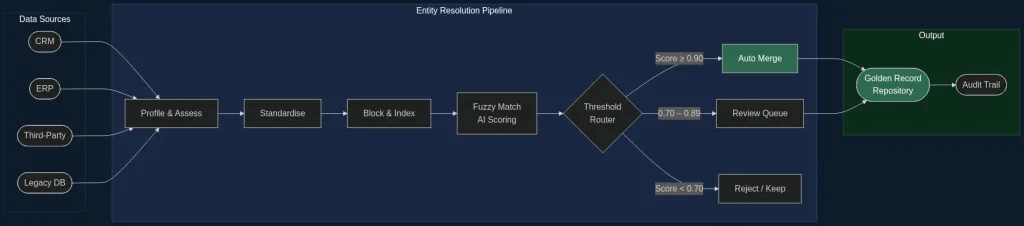
Entity matching links records across datasets that share no common key, using fuzzy scoring algorithms to identify the same real-world object. Here is how the six-stage pipeline works.
Best Data Preparation Tools: A Framework for Evaluating Your Options
The best data preparation tools cover all six stages: profiling, cleansing, deduplication, address verification, entity resolution, and job automation — in one automated pipeline.